
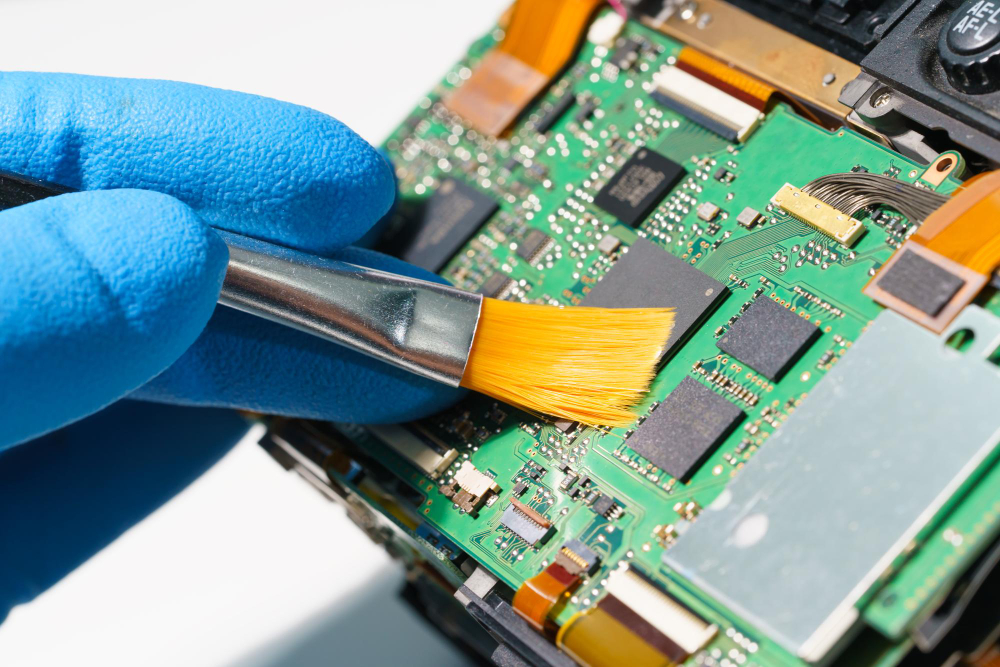
Many manufacturers and technicians wonder whether isopropyl alcohol is a safe and effective option for cleaning printed circuit boards. In most cases, the answer is yes. When used correctly, isopropyl alcohol removes flux residues, oils, dust, and other contaminants without harming sensitive electronics.
Understanding the proper cleaning methods, safety considerations, and process requirements helps maintain board reliability and electrical performance. Controlled cleaning practices also improve consistency and support efficient production environments.
How Isopropyl Alcohol Cleans PCBs
Isopropyl alcohol works as a solvent that dissolves contaminants found on printed circuit boards. It removes flux residues, light oils, and dust while evaporating quickly and leaving minimal residue behind. Using the appropriate concentration and application method helps protect components and maintain circuit integrity.
Several factors influence cleaning effectiveness, including solvent purity, drying time, and exposure levels. Controlled cleaning conditions help maintain electrical performance while removing unwanted substances.
Similar principles are used in precision applications involving degreasing machines for aerospace components, where contamination control is equally important.
Benefits Of Cleaning With Isopropyl Alcohol
Cleaning PCBs with isopropyl alcohol offers several advantages. Fast evaporation reduces moisture concerns and minimizes residue buildup. The solvent is compatible with many common PCB materials, including copper traces, solder joints, and surface-mounted components.
Proper cleaning helps prevent corrosion, electrical shorts, and assembly defects. Removing contaminants also improves long-term reliability and extends the service life of electronic assemblies. Reduced buildup contributes to easier maintenance and more stable performance over time.
Equipment For Safe PCB Cleaning
At Baron Blakeslee, we design systems that optimize the cleaning of electronics. Our vapor degreasing systems, distillation recovery units, and aqueous cleaning machines allow precise solvent application. These systems control temperature, exposure time, and airflow to maximize cleaning while minimizing risk.
Using the correct equipment improves consistency, reduces waste, and supports efficient production lines.
Best Practices For PCB Cleaning
Cleaning a printed circuit board requires attention to detail. Components should be powered down before cleaning begins, and electrostatic discharge precautions should always be followed. Brushes, lint-free wipes, or automated cleaning systems help reach confined areas without damaging components.
Applying excessive amounts of alcohol or soaking sensitive assemblies unnecessarily can increase the risk of damage. Inspection before and after cleaning helps verify that contaminants have been removed successfully.
Safety Considerations
Although widely used, isopropyl alcohol requires proper handling. Since it is flammable, cleaning should take place in well-ventilated areas with appropriate safety procedures. Gloves and protective eyewear help reduce exposure during operation.
Controlling temperature, solvent concentration, and ventilation further reduces risks. Following established safety practices helps protect operators and maintain stable working conditions.
Avoiding Common Pitfalls
Several mistakes can reduce cleaning effectiveness or damage electronic assemblies. Excessive wetting, prolonged exposure, and contaminated solvents may leave unwanted residues or affect sensitive components. Ultrasonic cleaning is generally avoided for certain electronic components such as crystals or delicate wire bonds.
Controlled cleaning methods help reduce these risks and maintain consistent results. Operators should inspect boards carefully and repeat cleaning when residues remain.
Similar process control is essential in industries that depend on degreasing machines for aerospace components, where precision and reliability are critical.
Applications Across Industries
Printed circuit boards are found in aerospace systems, automotive electronics, medical devices, telecommunications equipment, and consumer products. Clean circuit boards improve the reliability of avionics, engine controls, diagnostic devices, and sophisticated electronic assemblies.
Maintaining clean surfaces helps reduce defect rates and improve component longevity. Effective cleaning also lowers rework costs and contributes to greater manufacturing efficiency.
High-reliability industries frequently apply contamination control standards comparable to those used with degreasing machines for aerospace components.
Integrating Cleaning Into Production Lines
PCB cleaning can be incorporated directly into manufacturing workflows. Conveyorized systems move boards through cleaning stages while maintaining controlled exposure times. Inline filtration helps preserve solvent quality and removes contaminants throughout production.
Automated systems reduce manual handling, improve throughput, and support consistent cleaning performance. Better integration simplifies production planning and helps maintain quality standards across large production runs.
Monitoring And Quality Control
Regular monitoring plays an important role in maintaining cleaning performance.
Residue buildup or reduced effectiveness often indicates the need for solvent replacement or equipment maintenance. Routine inspections and testing help verify that cleanliness requirements are being met.
Detailed records of cleaning cycles also improve traceability and support regulatory compliance in industries with strict quality requirements. Preventive maintenance helps protect equipment investments and maintain stable operation.
Extended Benefits Of Optimized PCB Cleaning
Efficient cleaning enhances component performance and reliability. Clean PCBs reduce the risk of short circuits and signal interference. Thorough cleaning also prevents corrosion and buildup that can affect long-term operation.
Using isopropyl alcohol in controlled systems supports uniform cleaning, reduces defect rates, and improves overall product quality. Operators can achieve consistent results across large batches, improving production planning and minimizing delays.
These benefits support both quality control and operational efficiency.
Baron Blakeslee Expertise
Since 1920, Baron Blakeslee has manufactured industrial cleaning equipment in the USA. Our Williamstown, WV facility designs and builds vapor degreasing, aqueous, and semi-aqueous cleaning systems. Customers benefit from robust designs, technical expertise, and personalized service. We assist with installation, testing, training, and ongoing maintenance to ensure reliable PCB cleaning.
Our experience ensures cleaning processes are safe, efficient, and optimized for long-term performance. We also offer guidance on integrating equipment into production lines to maximize workflow efficiency.
Partner With Us For Reliable PCB Cleaning
Using isopropyl alcohol can be useful in maintaining PCB functionality and reliability. At Baron Blakeslee, we help facilities select, customize, and maintain equipment to clean electronics efficiently. Our team provides training, technical support, and replacement parts to maintain optimal performance.
Contact us today to learn how our systems can help you clean PCB with isopropyl safely and effectively while maintaining production efficiency. Our solutions support high-volume operations while preserving component integrity and ensuring consistent results for every board.


