
Ultrasonic cleaning has become the preferred method for precision cleaning across various industries. The effectiveness of ultrasonic cleaning largely depends on the ultrasonic cleaner frequency chosen for the application.
Selecting the correct frequency can make a significant difference in cleaning efficiency, time, and the longevity of the components being cleaned. In this article, we’ll help you understand the factors involved in choosing the best ultrasonic bath frequency, explain how frequency affects cleaning, and guide you in selecting the most suitable ultrasonic cleaner for your needs.
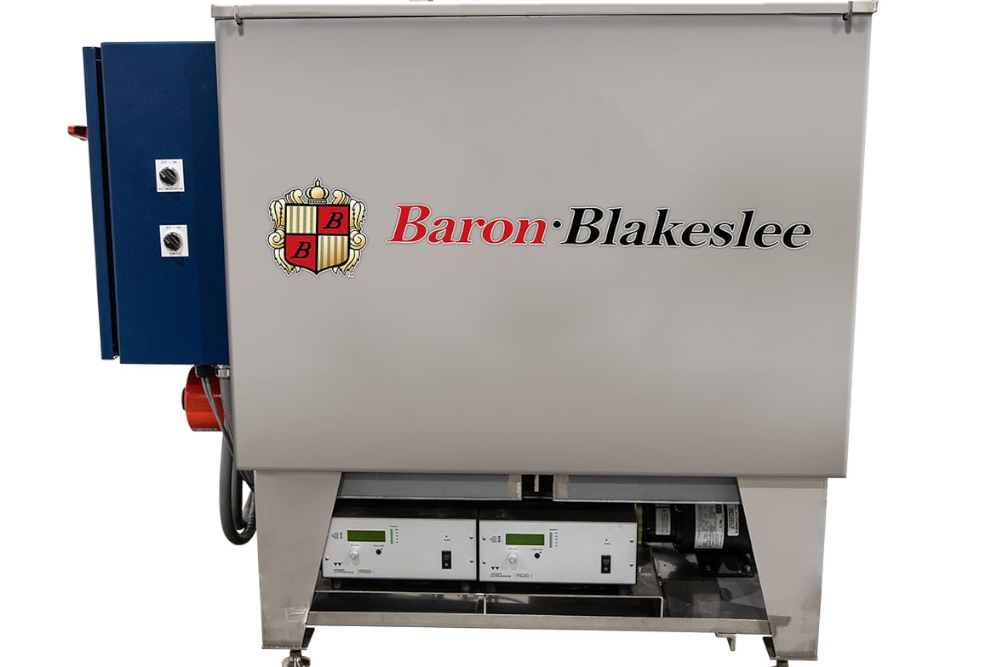
At Baron Blakeslee, we offer the best ultrasonic cleaners tailored to meet the unique needs of different industries. Our industrial cleaning systems are designed to optimize cleaning efficiency and precision.
What Is Ultrasonic Cleaner Frequency?
Ultrasonic cleaner frequency refers to the number of sound waves (frequency, measured in kilohertz, or kHz) generated by an ultrasonic cleaner per second. These sound waves create microscopic bubbles in a cleaning solution, a process known as cavitation. As the bubbles collapse, they generate localized heat and high-pressure waves that scrub surfaces clean of contaminants.
What frequency is an ultrasonic wave? Ultrasonic waves operate within a range of frequencies, typically between 20 kHz and 400 kHz. The frequency used in a particular cleaning application can significantly affect the cleaning efficiency and effectiveness.
Low Vs. High Frequency Ultrasonic Cleaners
When deciding on the best ultrasonic cleaner frequency, it’s important to understand the difference between low and high frequencies and how each impacts cleaning efficiency.
- Low Frequency Ultrasonic Cleaners
Low-frequency ultrasonic cleaners typically operate within the range of 20-40 kHz. These systems produce fewer, but larger cavitation bubbles, which create more powerful shockwaves when they collapse.
The increased energy and aggressive cleaning action are particularly useful for parts that have heavy contaminants, such as grease, dirt, oil, and oxidation. Low-frequency ultrasonic cleaners are commonly used in automotive industries for cleaning engine parts, fuel injectors, and carburetors, where tough dirt and grease need to be removed.
- High Frequency Ultrasonic Cleaners
On the other hand, high-frequency ultrasonic cleaners, typically operating in the range of 70-400 kHz, produce more, but smaller cavitation bubbles. These smaller bubbles provide gentler cleaning action, making them ideal for more delicate and intricate parts, such as medical instruments and jewelry. The finer bubbles create a softer cleaning process, removing contaminants without causing damage to fragile surfaces.
Factors to Consider When Choosing Ultrasonic Cleaner Frequency
Here’s a breakdown of key considerations when selecting the ideal frequency for your ultrasonic cleaning needs.
- Material Type
The material of the object you are cleaning reacts differently to sound waves. Harder materials like stainless steel, titanium, and glass reflect energy well, making the cavitation process very effective. Soft materials like rubber, lead, or certain plastics can actually absorb the ultrasonic energy, acting as a dampener.
If you clean a soft plastic part at a high frequency, the bubbles might not have enough energy to overcome the material's natural absorption. In these cases, you might need a slightly lower frequency or a longer cleaning cycle to achieve the desired result.
In contrast, fragile materials, such as glass, ceramics, and thin-walled metals, require high-frequency cleaners to avoid damaging delicate surfaces while still ensuring thorough cleaning.
- Level of Contamination
Sometimes the requirements of a cleaning job depend less on the object itself and more on the specific contaminant on the surface. Identifying the nature of the soil helps you narrow down the ideal ultrasonic frequency for the task.
For instance, buffing compounds present a unique challenge because they are notoriously sticky and often contain waxes or binders. Removing these effectively usually requires a 40 kHz frequency paired with a high-pH detergent to break the chemical bond while the medium-sized bubbles provide enough mechanical force to scrub the residue away.
In contrast, if you are dealing with fingerprints, light oils, or thin films of dust, high frequencies of 80 kHz or more are the superior choice. These settings create a much higher density of bubbles, providing more "cleaning events" per second across the entire surface area.
Typically, use of high frequency ultrasonics allows for thorough decontamination without the need for aggressive force, which is why this range works so well for optics and polished finishes.
Heavy carbon buildup, however, demands the heavy lifting provided by 25 kHz or 40 kHz settings. Because carbon is a hard contaminant that bonds tightly to metal surfaces, you need the high-impact energy of larger bubble implosions to crack the deposits and lift them away from the substrate.
- Cleaning Precision
If cleaning precision is important, high-frequency ultrasonic cleaners may be a better option in certain applications. These cleaners produce finer cavitation bubbles, which enable them to clean small crevices and delicate surfaces without causing damage.
For more robust cleaning needs, such as cleaning large industrial parts, a low-frequency ultrasonic cleaner will provide the strength needed to ensure thorough and efficient cleaning.
Matching Ultrasonic Frequency to Specific Applications
Each type of ultrasonic cleaner frequency is best suited for specific applications, depending on the material and the contamination. Here’s how different industries apply various ultrasonic frequencies for optimal cleaning results.
- Automotive Industry
The automotive industry often uses low-frequency ultrasonic cleaners for parts like engine components, carburetors, and fuel injectors. These parts tend to have heavy contaminants like oil, grease, dirt, and carbon buildup, which require a more aggressive cleaning process.
- Jewelry and Watchmaking
High-frequency ultrasonic cleaners are commonly used in jewelry and watchmaking to clean delicate items like rings, necklaces, bracelets, and watches. These high-frequency cleaners are gentle enough to remove dirt and residues from precious metals and gemstones without causing scratches or damage.
The smaller bubbles produced at high frequencies allow the cleaner to get into crevices and tiny spaces, cleaning intricate parts like watch bands and settings.
- Medical and Dental Industry
In the medical and dental industries, cleaning tools and instruments such as surgical instruments, dental handpieces, and syringes require the utmost precision and care. High-frequency ultrasonic cleaners are widely used for these applications, as they can effectively remove organic matter, blood, and other contaminants from the surfaces of instruments without causing any damage.
- Food Industry
In the food industry, low-frequency ultrasonic cleaners are often used to clean large equipment such as canisters, containers, and filtration systems. These parts may have residue, oils, or other substances that require the more aggressive cavitation provided by low-frequency cleaning. The powerful cleaning action ensures that food processing equipment remains sanitary, helping to prevent contamination in production lines.
Common Mistakes When Choosing a Frequency
Many users buy a machine based solely on price or tank size, ignoring the frequency specs. Here are the most common pitfalls:
- Using 25 kHz on Aluminum: This almost always leads to surface damage. Aluminum is relatively soft and susceptible to the high-impact implosions of low-frequency waves.
- Cleaning Intricate Items at 40 kHz: While 40 kHz is versatile, it may fail to reach the very center of tightly wound springs or the deep recesses of complex manifolds in certain applications.
- Assuming Higher Frequency Is "Better": If you try to clean a very greasy metal part at 120 kHz, you are likely to be disappointed. The bubbles are too weak to break through thick layers of organic buildup.
Considering Factors Beyond Frequency
While frequency is the foundation, it doesn't work alone. To get the most out of your chosen kHz setting, you must consider two other variables:
- Heat
Heating the solution reduces the viscosity of oils and softens contaminants. Most ultrasonic cleaning happens between 50°C and 65°C. However, be careful with high frequencies and heat; some delicate parts can warp or fail if the water is too hot.
- Chemistry
The cleaning solution must match the job. An acidic solution helps remove scale and oxidation, while alkaline solutions work better for grease and fats. The chemistry also affects how bubbles form. Some soaps create too much foam, which can actually dampen the ultrasonic waves and make the cleaning less effective.
The Benefits of Custom Ultrasonic Cleaners
When selecting an ultrasonic cleaner, sometimes off-the-shelf solutions don’t meet your specific needs. Our team understands that every cleaning process is unique. That's why we offer a range of custom ultrasonic cleaners designed to accommodate specific frequency needs, tank sizes, and filtration requirements.
Our ultrasonic cleaners come with customizable options, including electric, steam, or gas heat, allowing you to tailor the system to your production line and energy preferences. We also offer ultrasonic cleaners designed for aqueous wash systems, semi-aqueous, and solvent chemistries, making them versatile enough for various applications across diverse industries.
No matter the requirements, we can design an ultrasonic cleaning system that’s perfect for your needs. Additionally, we offer automation options to reduce labor costs and improve cleaning consistency, ensuring that every item is cleaned to the highest standard with minimal downtime.
Finding the Perfect Ultrasonic Cleaner Frequency for Your Needs
Choosing the right ultrasonic cleaner frequency is central to achieving the best results in your cleaning process. Whether you require an aggressive cleaning action for tough contaminants or a gentle approach for delicate items, understanding the characteristics of low and high-frequency ultrasonic cleaners helps ensure that your cleaning tasks are efficient, effective, and safe.
By carefully considering factors such as the material type, contamination level, and precision requirements, you can determine which ultrasonic frequency will best suit your needs. The right frequency ensures that your parts are cleaned thoroughly without damage.
Whether you need high-frequency precision cleaning or low-frequency heavy-duty solutions, we can help you find the perfect fit. Contact us today to discuss your specific requirements and discover how our custom ultrasonic cleaners can enhance your cleaning process.


