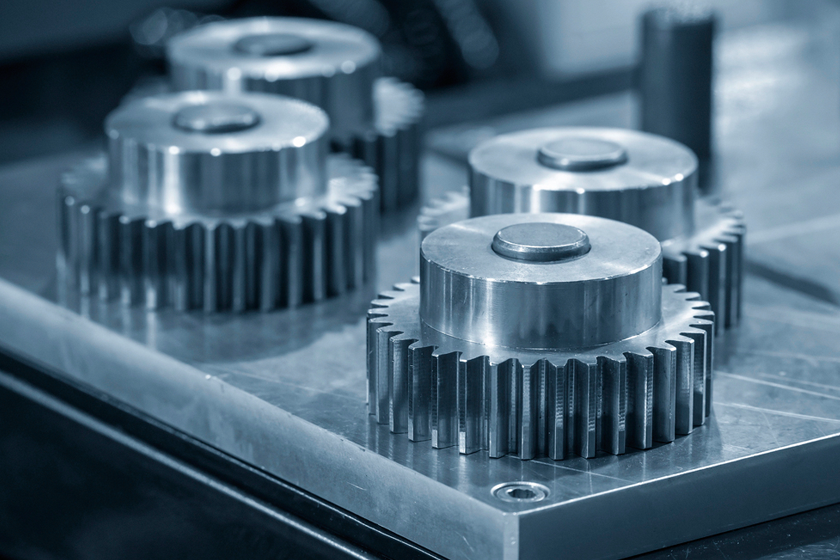
The path from raw stock to finished component doesn’t end at the last toolpath. Cutting fluids, fine chips, oxides, and invisible films cling to machined parts, ready to interfere with coating, bonding, plating, assembly, or metrology.
Cleaning machined parts blends chemistry, mechanics, temperature, and process control into a disciplined practice. Get it right and parts move downstream with fewer rejects, faster cycles, and longer tool life. Get it wrong and contamination becomes the silent saboteur of quality.
What Makes Machined Parts Hard to Clean
Machining leaves a stubborn mix of soils and shapes. Petroleum and synthetic coolants, tapping fluids, and fingerprints mingle with fines and abrasives. Geometries (blind holes, threads, cross-drilled passages, splines, tight clearances) trap soil and air.
Materials such as aluminum, copper alloys, magnesium, and technical polymers demand chemistries and temperatures that preserve surface integrity. Downstream steps (paint, anodize, passivation, adhesive bonding, soldering, vacuum service) each impose different cleanliness metrics. Any strategy must match soil load, part geometry, substrate sensitivity, and take time.
Set the Objective: Cleanliness for Function, Not Shine
Shiny isn’t the same as clean. Anchor targets to function: adhesion readiness for coatings and adhesives; dimensional stability without swelling, etching, or residue; surface finish preservation (Ra/Rz) and edge quality; low levels of ionic, particulate, and non-volatile residue aligned to the application. When success ties to function, processes become more consistent and scalable.
Chemistry: Match Soil and Substrate
Chemistry selection is foundational for cleaning machined parts.
- Aqueous detergents excel at particulates and many water-dispersible soils. Formulations vary by pH, surfactants, and chelators. They pair well with mechanical energy on robust metals; take care with zinc, magnesium, and sensitive alloys.
- Semi-aqueous blends couple solvency with water rinsing to widen the soil window, tackling stubborn oils while preserving a water-rinse finish.
- Modified alcohol/hydrocarbon degreasers are strong on petroleum-based lubricants and waxy films. They’re typically run in sealed, vacuum-capable systems with built-in recycling.
- Modern halogen-free solvents offer high solvency with controlled volatility and low residue, often used in vapor-phase or vacuum processes.
Always consider material compatibility, downstream specs, local regulations, and how recycling or distillation will maintain bath quality.
Mechanical Energy That Moves Soil
Chemistry unlocks soil; mechanics move it. Spray-under-immersion produces turbulent shear across surfaces and into features. Ultrasonics generate cavitation micro-jets that dislodge films and fines on metals and complex geometries where appropriate.
Rotary or oscillatory motion exposes fresh boundary layers and prevents shadowing. Vacuum assist and pressure pulsing evacuate trapped air and drive fluid exchange in blind passages. Rotary basket dynamics and smart fixturing can be as impactful as the energy source itself.
Vapor Degreasing: Solvent Precision and Consistency
Vapor degreasing is a benchmark for removing machining oils and fine residues from metals and many technical plastics. Warm solvent vapor condenses on cool parts, dissolving soils and rinsing them away as pure condensate. Advantages include process stability (vapor is pure by design), short cycles, dry, spot-free finishes, and excellent results on tight-tolerance components, lapped surfaces, and parts bound for vacuum or optical service.
Advanced systems may add ultrasonic zones, spray-under-immersion, multilayer solvent management, and integrated distillation for purity and economy.
Vacuum Vapor Degreasing: Deep Penetration, Low Emissions
Sealed, vacuum-assisted systems elevate vapor degreasing by removing air from internal passages so solvent can penetrate and rinse complex features rapidly.
Benefits include effective cleaning of blind holes and tortuous channels, low emissions with high recovery, and stable, automated drying and cooling. Dense loads and intricate parts move through with repeatable, high-grade cleanliness.
Aqueous and Semi-Aqueous Systems: Versatile and Scalable
Water-based platforms shine for particulates and many emulsified soils. With the right detergent and mechanical energy, they deliver outstanding results. Multistage immersion lines sequence clean, rinse, and dry with agitation and filtration.
High-pressure spray cabinets suit robust geometries and heavy soils. Rotary basket systems handle high volumes of small parts efficiently. Closed-loop rinsing and DI polish support low-conductivity final rinses for sensitive downstream processes. Drying also matters. Hot air knives, vacuum drying, or centrifugal methods prevent watermarking and trapped moisture.
Ultrasonic Cleaning for Machined Metal Parts
Ultrasonic cleaners can be highly effective for machined metals and complex geometries when applied correctly. Cavitation reaches into fine features (blind bores, threads, cross-holes), dislodging films and embedded fines. System flexibility matters: the right ultrasonic frequency, tank size and shape, and heating method (electric, steam, or gas) let teams tune energy delivery to part geometry and soil type.
Filtration options, including oil coalescing and skimming, keep baths clear and performance steady. Units designed for aqueous, semi-aqueous, and select solvent chemistries broaden the applications. For flammable solvents like acetone or isopropyl alcohol, Class I, Div. 1 designs add safety while preserving throughput. As with any method, pair ultrasonics with controlled chemistry, bath management, and robust drying to reach repeatable, production-grade results.
Modified Alcohol and Hydrocarbon Systems: Strong on Oils
These chemistries dissolve petroleum lubricants and waxy residues common in machining. In sealed, vacuum-capable machines, they penetrate features, dry quickly, and maintain solvent quality through integrated distillation and filtration. They pair well with steel, stainless, and many nonferrous metals; check polymer compatibility on a case-by-case basis.
Hybrid Strategies: Two Steps, One Outcome
Complex soils often benefit from two steps: solvent-first to break oil films, then aqueous to lift particulates and salts; or the reverse, depending on the mix. Hybrid platforms that combine modified alcohol and aqueous stages in one machine streamline handling and standardize recipes across product families.
Fixturing and Part Presentation
Great chemistry can’t overcome poor presentation. Tilt and rotate parts to dislodge bubbles and open flow paths. Avoid deep nests and contact surfaces that cause shadowing. Use dedicated manifolds for through-holes and internal channels. Standardize load spacing so fluid dynamics and drying remain consistent. Small changes here can cut cycle time and boost inside-feature cleanliness.
Solvent Recycling and Bath Management
Performance drops as contamination accumulates. A disciplined program keeps baths healthy: distillation and fractionation for solvent systems; staged filtration for aqueous lines with coalescers for tramp oil; regular titration, refractive index, or conductivity checks for detergent concentration; and sludge management to decant fines and extend life. Healthy baths deliver stable results and lower consumable spend.
Drying Without Surprises
Residual moisture or solvent haunts downstream steps. Match drying to geometry and throughput: hot air impingement and air knives for open shapes; vacuum drying for blind holes and capillaries; staged convection or infrared to remove bulk moisture and finish dry. Interlocks on temperature and time help parts exit truly ready for measurement or assembly.
Cleanliness Validation: Proving What the Eye Can’t See
Verification turns cleaning machine parts from a step into a controlled process. Visual or borescope inspection catches pooling, staining, and chips. Particle counts via flush-and-capture confirm limits by size and count. Gravimetric NVR quantifies residual films.
Conductivity or ion chromatography reveals ionic contamination that can drive corrosion or electrical leakage. Dyne or contact angle readings gauge surface energy for bonding and coating readiness. TOC on final rinses checks for organics in aqueous lines. Document limits, methods, and frequency; occasional gauge R&R sustains trust in data.
Sector Notes
Aerospace favors tight NVR and particle limits with chemistry approvals and spec-driven process control. Medical device work emphasizes biocompatibility, passivation integrity, and low residues, often with TOC monitoring. Automotive balances throughput, bath life, and coating compatibility, with robust drying to avoid trapped moisture.
Electronics hardware (mechanical housings, heat sinks) targets oil-free, particle-controlled finishes; avoid aggressive agitation on any sensitive subassemblies. Optics and vacuum components demand ultra-low residue and careful handling.
Industrial Cleaning Equipment Since 1920 | American-Made Degreasers & Aqueous Lines
Since 1920, Baron Blakeslee has designed and built industrial cleaning systems in Williamstown, WV, supporting manufacturers with American-made, production-ready equipment. The portfolio spans vapor and vacuum degreasers, modified alcohol and hydrocarbon systems, aqueous lines, hybrid platforms, ultrasonic cleaners (benchtop to industrial, with multiple frequencies, tank sizes and shapes, filtration, and options for flammable solvents), solvent recycling, and automation: standard or custom, tuned to real workloads and geometries.
Have a project in mind? Contact us today to start a consultation.