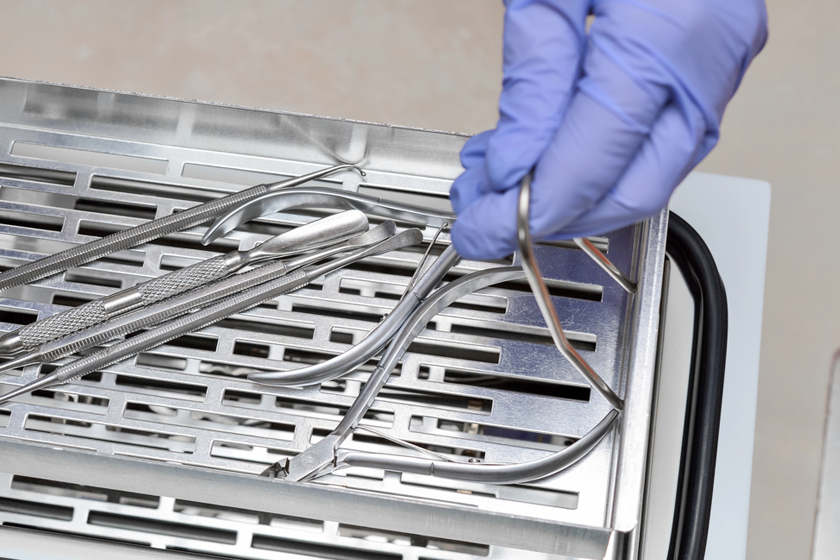
Medical device components demand a cleaning process that delivers repeatable outcomes, documented controls, and traceable records. It’s not just about a spotless surface; it’s about building a validated pathway from incoming parts to finished, biocompatible assemblies.
Here’s how to clean medical device components with a methodical approach that supports audits and reliable patient outcomes.
Start with Risk, Materials, and Intended Use
Begin by defining the device’s use, patient contact duration, and materials. Stainless steel, titanium, and cobalt-chrome tolerate a wide range of chemistries; aluminum and copper alloys may need a moderated pH and temperature.
Polymers and elastomers call for solvent compatibility checks and gentler mechanics. Map risks: pyrogens, bioburden, extractables, and residues that could interfere with bonding, coating, or sterilization.
Build the Right Process Envelope
Select a process that matches soils and materials:
- Aqueous wash systems excel at particulates and water-dispersible residues.
- Modified alcohol and hydrocarbon platforms remove oils and waxy films in sealed, vacuum-capable systems.
- Vapor or vacuum vapor degreasing delivers low-residue finishes for tight tolerances.
- Ultrasonic energy can be powerful for metals and complex geometries; avoid applying ultrasonics to assembled electronics or fragile subcomponents.
Define parameters (chemistry, concentration, temperature, time, and mechanical energy) so the process is controllable and repeatable.
Control Contamination In, Contamination Out
Clean starts upstream. Specify incoming part cleanliness and protect parts after machining with clean packaging. In-process, manage bath health: staged filtration for particulates, coalescers for oils, and periodic titration or conductivity checks for detergent concentration. Distillation and multi-stage filtration keep solvent systems consistent. Fixture parts to expose shadowed features, promote drainage, and limit nesting that traps soil or bubbles.
Rinsing and Drying for Low Residue
Rinse quality matters. Use DI or RO water with monitored conductivity and maintain flow paths that reach blind passages. Multistage rinses reduce ionic load; a final polish step lowers the risk of spots and residues.
Dry completely with methods matched to geometry: hot air impingement for open features, vacuum drying for capillaries and threads, and staged convection or IR for dense loads. Residual moisture undermines coatings, packaging, and sterilization steps.
Validation: Proving Cleanliness with Data
Move from assumption to evidence with targeted testing:
- Particulate: flush-and-capture with size/count limits aligned to device class and process risk.
- NVR (non-volatile residue): gravimetric measurement of residual film mass.
- Ionic contamination: conductivity or ion chromatography for chloride, nitrate, and other ions tied to corrosion or functional risk.
- Surface energy: dyne inks or contact angle to verify bonding or coating readiness.
- Bioburden and endotoxin (as applicable): methods aligned to regulatory expectations.
Define acceptance criteria, sampling plans, and test frequency in protocols. Conduct gauge R&R on key methods to maintain confidence in measurements.
Documentation and Change Control
Every parameter should live in documented work instructions and batch records: chemistry lot numbers, setpoints, actuals, exposure times, filtration status, and verification results. Train operators and record qualifications. Use controlled forms for deviations, out-of-spec results, corrective actions, and revalidation triggers.
When chemistry, equipment, or fixtures change, run a documented change control with risk assessment and verification before release to production.
Talk to the Medical Device Cleaning Experts
Since 1920, Baron Blakeslee has designed and built precision cleaning systems in Williamstown, WV—American-made equipment backed by deep application expertise. For medical device manufacturing, we offer aqueous, solvent, and hybrid platforms with absolute filtration options, Beta 5000 ratings, cleanroom-ready designs, automation, and validation-friendly controls.
From bioburden reduction to low-residue surfaces for bonding, coating, and sterilization, our team helps configure repeatable, compliant processes. Ready to begin? Contact us today to start a consultation.