Quick Summary
Manufacturers across multiple industries continue searching for practical ways to reduce waste, lower operating costs, and improve process efficiency. A solvent recovery distillation unit can support those goals by reclaiming used solvents for reuse within industrial cleaning operations.
When implemented correctly, these systems can help facilities reduce solvent purchases while supporting cleaner production workflows.
Many facilities use solvents during vapor degreasing, precision cleaning, coating removal, parts washing, and surface preparation. Over time, contaminants accumulate within these solvents. Instead of disposing of the entire volume, recovery systems separate usable solvent from oils, particulates, and other residues through distillation. The reclaimed solvent can then return to production.
Successful implementation involves more than purchasing equipment. Facilities should evaluate solvent compatibility, production demands, operator training, workflow integration, and long-term maintenance requirements before installation begins.
Understanding How Solvent Recovery Works
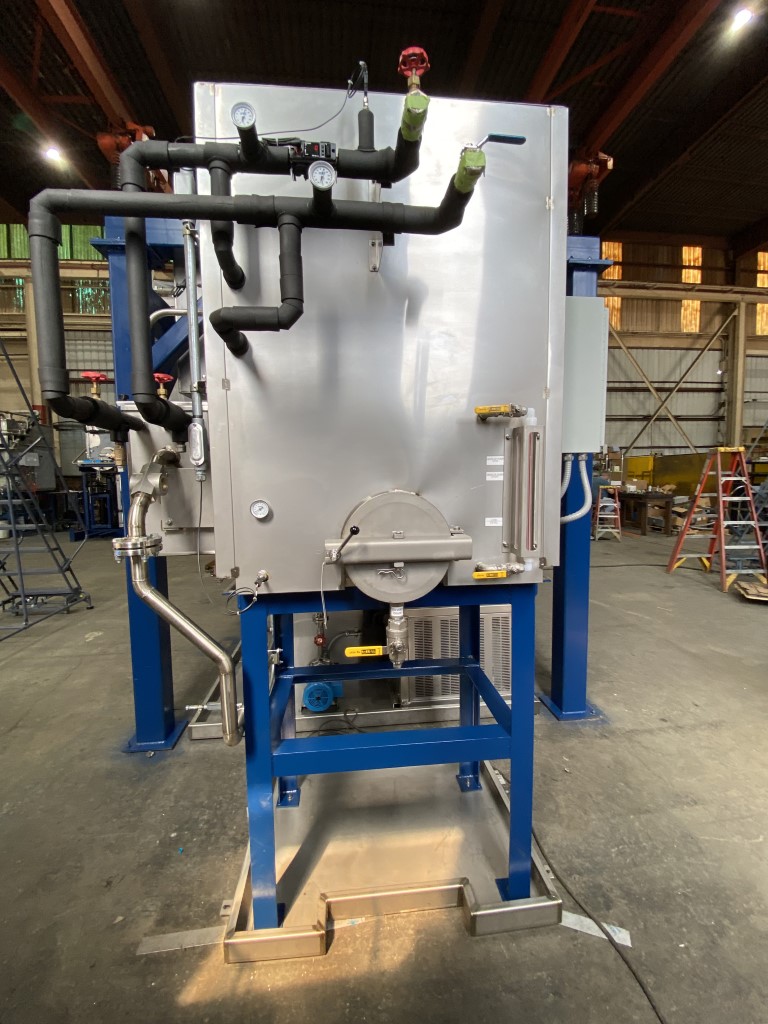
Industrial solvent recovery systems operate through a distillation process. Contaminated solvent enters a heated chamber where the solvent vaporizes at a lower temperature than most contaminants. The vapor then moves through a cooling section where it condenses back into reusable liquid.
The remaining waste material stays inside the boiling chamber for disposal. Depending on the application, recovered solvent may return directly to cleaning equipment or move into a holding tank for later use.
This process supports consistent cleaning quality while reducing the frequency of fresh solvent replacement. Facilities that generate large solvent volumes often notice meaningful reductions in operational waste streams after installing a solvent recovery distillation unit.
Different industries apply this technology in different ways. Aerospace manufacturers may recover solvents used in precision component cleaning. Automotive facilities often reclaim cleaning fluids from metal fabrication processes. Medical manufacturers may rely on recovery systems to support high-purity cleaning requirements.
Start With A Complete Process Evaluation
One of the most common implementation mistakes involves selecting equipment before fully understanding the cleaning process. Facilities should first evaluate how solvents move through production.
This includes identifying solvent consumption rates, contamination sources, cleaning temperatures, throughput requirements, and waste generation levels. Facilities should also review contaminants entering the solvent stream. Oils, greases, fluxes, resins, and particulates can all affect recovery performance.
A proper evaluation helps determine whether batch processing or continuous recovery is more suitable. Smaller facilities may benefit from compact batch systems, while larger operations often require higher-capacity configurations of a solvent recovery distillation unit.
Production schedules also matter. Facilities operating around the clock may require integrated systems that can keep pace with continuous manufacturing demands.
Select Equipment Based On Application Requirements
Not every recovery system fits every manufacturing environment. Equipment selection should align with both the solvent chemistry and the production process.
Some solvents require specialized temperature controls or material compatibility considerations. Facilities working with aggressive chemistries may need corrosion-resistant construction materials. Others may require explosion-proof configurations depending on plant safety requirements.
Automation capabilities can also influence long-term efficiency. Modern systems may include programmable controls, automated waste discharge, monitoring sensors, and integrated solvent transfer functions.
Space constraints should also enter the conversation early. Some facilities attempt to install recovery equipment without considering ventilation access, maintenance clearance, or utility connections. That often creates installation delays later in the project.
Facilities should also think about future expansion. A system sized only for current demand may struggle if production volume increases later.
Consider Environmental And Regulatory Factors
Solvent recovery systems can support sustainability goals by reducing waste disposal volumes and lowering fresh solvent consumption. However, facilities still need to understand local environmental and safety regulations before installation.
Ventilation requirements, emissions standards, hazardous waste handling procedures, and fire safety codes may vary depending on the facility location and solvent type. Working closely with environmental health and safety teams during planning can help reduce compliance issues later.
Documentation also matters. Facilities should maintain accurate records involving solvent handling, waste disposal, and recovery performance. Clear operational procedures can help improve consistency while supporting regulatory reporting requirements.
Many companies also view solvent recycling as part of broader environmental initiatives. Reducing waste generation can support long-term operational goals while helping facilities improve resource management practices.
Operator Training Plays A Major Role
Even advanced equipment depends on proper operator usage. Training should begin before the system enters production.
Operators should understand loading procedures, temperature management, contamination monitoring, safety precautions, and shutdown protocols. Maintenance personnel should also receive training on cleaning schedules, inspections, and component replacement intervals.
Facilities sometimes underestimate the importance of solvent management practices outside the recovery equipment itself. Poor storage conditions or cross-contamination between solvents can reduce recovery effectiveness and shorten solvent life.
Clear operating procedures help reduce inconsistencies between shifts. Facilities with strong training programs often experience smoother implementation periods and fewer process interruptions after startup.
Integrate The System Into Existing Cleaning Operations
Implementation becomes more effective when solvent recovery is treated as a core part of the overall cleaning process rather than a standalone machine.
Integration may include connection with vapor degreasers, storage tanks, transfer pumps, or automated cleaning lines. Facilities should map how solvents travel through production areas and identify the most efficient point to incorporate recovery within that workflow.
Some operations run recovery at the end of each shift, while others operate systems continuously during production. The right approach depends on solvent volume, contamination levels, and overall manufacturing schedules.
Careful planning also helps reduce installation delays. Coordinating utilities, piping, ventilation, and available floor space before equipment arrives often leads to faster commissioning and a smoother startup process.
Monitor Solvent Quality Regularly
Recovered solvent quality should remain consistent enough to support cleaning performance requirements. Facilities should establish testing procedures to monitor purity levels throughout operation.
Changes in contamination levels may indicate upstream process issues or improper solvent handling practices. Monitoring can also help determine when maintenance or system cleaning becomes necessary.
Facilities working in precision manufacturing environments may require tighter quality controls. Aerospace, electronics, and medical applications often involve stricter cleanliness standards than general industrial cleaning operations.
Long-Term Maintenance Supports Performance
Like any industrial equipment, recovery systems perform best when maintenance remains consistent. Ignoring preventative maintenance can reduce recovery efficiency and increase operational interruptions.
Routine checks usually focus on seals, heating elements, condensers, pumps, filters, and sensors. It is also important to keep an eye on residue buildup inside the boiling chamber since too much contamination can start to affect heat transfer and overall performance.
Maintenance timing should match how the system is actually being used. Facilities with heavier solvent loads or higher contamination levels often need more frequent service compared to lighter-duty operations.
Keeping simple records also helps over time. Tracking recovery output, downtime, and maintenance history makes it easier to spot patterns and plan work more effectively instead of reacting to problems after they happen.
Why More Manufacturers Are Bringing Recovery In-House
A growing number of manufacturers are shifting away from outsourcing solvent disposal and replacement. Rising operational costs, tighter environmental expectations, and the push for more efficient production have made in-house recovery a more practical option for many facilities.
Managing recovery on-site reduces reliance on third-party disposal services and gives teams more direct control over day-to-day cleaning operations. It also helps streamline production flow, since reclaimed solvent is available right within the facility instead of waiting on external processing cycles. In some cases, this leads to noticeably faster turnaround during busy production schedules.
The cost benefits tend to stand out most in high-volume environments where solvent use is constant. Cutting back on frequent solvent replacement can gradually offset the upfront investment in recovery equipment over time.
There is also a flexibility advantage that many operations value. When solvent management happens internally, it becomes easier to adjust cleaning processes, respond to production changes, and fine-tune workflows without depending on outside schedules or delays.
Supporting Industrial Cleaning Operations With Reliable Equipment
At Baron Blakeslee, we understand how important solvent management has become within modern manufacturing environments. Since 1920, we have engineered industrial cleaning and recovery systems for customers across aerospace, automotive, medical, electronics, and precision manufacturing industries.
Our equipment is designed and manufactured in the United States at our facility in Williamstown, West Virginia. We support customers with application evaluation, technical expertise, installation assistance, testing, maintenance services, and custom-engineered solutions tailored to specific production requirements.
As manufacturers continue seeking smarter ways to improve operational efficiency, solvent recovery technology remains an important part of long-term industrial cleaning strategies.
FAQs
How does solvent recovery help reduce operating costs?
Solvent recovery systems reclaim usable solvent from contaminated cleaning fluids through distillation. This process can help facilities reduce fresh solvent purchases and lower waste disposal volumes over time.
What industries commonly use solvent recovery systems?
Many industries use solvent recovery equipment, including aerospace, automotive, medical manufacturing, electronics, metal fabrication, and precision machining. These systems are often used anywhere industrial solvents support cleaning or surface preparation processes.
Can recovered solvent maintain cleaning performance?
Recovered solvent can often support consistent cleaning performance when the system is properly maintained and monitored. Regular solvent quality testing helps facilities track purity levels and identify contamination issues before they affect production.