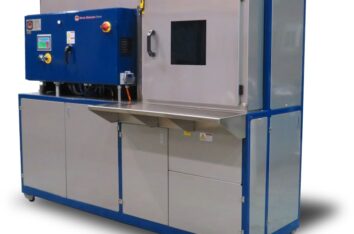
Quick Summary: Reducing degreasing costs in energy-sector facilities requires attention to solvent loss, energy consumption, labor time, and equipment capacity as interconnected factors rather than separate expenses. Vacuum and airless systems seal the cleaning chamber and recover vapor internally, while distillation equipment reclaims and purifies solvent for reuse instead of treating it as a disposable input. Conveyor and material-handling automation cuts down on manual labor, while properly sizing equipment to actual production throughput prevents the inefficiencies associated with systems that are either too large or too small. Following manufacturer-recommended maintenance schedules also extends equipment service life and reduces the higher expenses associated with premature replacement.
Energy sector facilities, from power generation to oil and gas processing, run equipment that accumulates grease, oils, and process residues on a continuous basis, and choosing the right degreaser machine for energy operations directly affects both cleaning quality and the bottom line.
Inefficient cleaning processes waste solvent, extend labor hours, and can even shorten the service life of the equipment being cleaned.
Baron Blakeslee’s vapor degreaser systems are built to address these cost drivers directly, and this article covers how the right equipment reduces both use and expense.
Understanding Where Costs Accumulate
Degreasing expenses generally come from several areas, including solvent consumption, energy required to heat and maintain the cleaning process, labor involved in loading and unloading parts, and downtime caused by maintenance or inefficient cleaning cycles. Reducing costs across each area can produce meaningful savings over the equipment’s operating life.
The actual expense can differ considerably based on part dimensions, cleaning frequency, soil severity, solvent selection, and production volume.
Monitoring solvent consumption, cycle duration, labor requirements, and equipment downtime gives facilities a clearer understanding of where cleaning expenses originate. That information can then guide equipment selection and process changes toward the areas with the greatest potential for savings.
Vacuum and Airless Systems for Reduced Solvent Loss
Traditional open-top degreasing exposes more solvent vapor to the surrounding environment, increasing replacement expenses and emissions. Airless vacuum systems close off the cleaning chamber and recover vapor internally, significantly reducing the amount of solvent lost to the atmosphere during each cycle.
Vacuum operation also creates greater control over the cleaning environment by limiting vapor exposure outside the enclosed chamber. This configuration can be especially useful for energy facilities that clean large components or operate frequent degreasing cycles.
Internal solvent recovery reduces unnecessary consumption while creating a more controlled cleaning process. It can also lower the recurring expense associated with replacing solvent that would otherwise evaporate during operation.
Solvent Recovery and Distillation
Instead of treating used solvent as a disposable material, distillation recovery equipment separates and purifies it for reuse. This reduces purchasing costs while decreasing the volume of waste that facilities must manage and dispose of properly.
Distillation separates contaminants from used solvent according to differences in boiling points, allowing the recovered solvent to return to the degreasing process. Reusing reclaimed solvent can reduce reliance on fresh purchases and limit the amount of contaminated material generated during routine operation.
For facilities with substantial cleaning volumes, these reductions can accumulate into significant savings over longer operating periods.
Automation to Reduce Labor Time
Manual loading, unloading, and cycle monitoring require technician time that could be directed toward other responsibilities. Conveyor systems and automated material handling reduce the amount of hands-on labor associated with each cleaning cycle, giving personnel more time for higher-value tasks.
Automation can also create greater process consistency by controlling loading sequences, cleaning durations, and part movement according to established parameters. Fewer repetitive manual steps reduce operator involvement in routine activities and make cycle times more predictable.
Matching Equipment Capacity to Actual Throughput
Oversized equipment consumes unnecessary energy because it must heat and maintain more solvent volume than the facility actually requires.
Undersized equipment creates bottlenecks that can lengthen labor hours and disrupt production flow. Matching degreaser capacity to actual production volume avoids both types of inefficiency.
Equipment sizing should reflect current production requirements while accounting for realistic future demand. Reviewing component dimensions, batch sizes, cleaning frequency, cycle duration, and anticipated production growth can prevent the selection of a system that consistently operates well outside its intended capacity.
Reducing Component Damage and Rework
Aggressive or poorly controlled cleaning techniques can damage sensitive components, resulting in expensive rework or replacement. A properly controlled vapor degreasing cycle can thoroughly clean parts without introducing the mechanical stress associated with abrasive cleaning methods.
Controlled vapor cleaning can reduce reliance on aggressive scrubbing, blasting, and other physical techniques that may affect delicate surfaces.
This consideration is especially important for precision-machined components, electrical parts, valves, and other equipment where dimensional accuracy or surface condition must be preserved.
Energy Efficiency in Heating and Recovery
Modern degreasing equipment that incorporates efficient heating elements and heat recovery between cycles can consume less energy per cleaning run than older systems. Those savings become increasingly significant in facilities operating continuous shifts or high-volume cleaning processes.
Heating accounts for a substantial share of the energy consumed during solvent-based cleaning. This makes thermal efficiency an important factor when selecting equipment. Insulated chambers, efficient heating systems, and recovery of usable thermal energy can reduce unnecessary heat loss throughout operation.
Extending Equipment Service Life Through Proper Maintenance
Degreasing equipment that receives regular maintenance according to manufacturer guidelines tends to run more efficiently over a longer service life, avoiding the higher costs associated with premature equipment replacement.
Reducing Waste Disposal Costs
Less solvent lost to evaporation and better recovery through distillation both translate directly into less spent solvent requiring disposal, which lowers the fees and compliance burden tied to hazardous waste handling.
Improving Consistency Across Shifts
Standardized degreasing cycles with automated controls reduce the variability that comes from different operators running equipment slightly differently, helping energy facilities maintain the same cleaning quality regardless of which shift is on duty.
Reduce Degreasing Costs in Your Energy Facility
Reducing degreasing costs in energy facilities comes down to choosing the right equipment configuration and maintaining it properly over time, rather than accepting inefficiency as a fixed cost of doing business.
Baron Blakeslee’s bi-solvent degreasing systems can be configured to match specific throughput and solvent requirements for energy sector operations. Facilities looking to reduce solvent purchasing costs long-term should also consider our Solvent Recycling Distillation Systems for on-site solvent recovery.
Baron Blakeslee has supported the energy industry with cleaning equipment for decades, and our spare parts program helps keep existing equipment running efficiently rather than facing premature replacement.
Contact Baron Blakeslee to find the right degreasing configuration for your energy facility.
Frequently Asked Questions
How much solvent can vacuum degreasing systems save compared to open-top units?
Sealed vacuum systems recover vapor internally rather than letting it escape into the surrounding air, which meaningfully reduces solvent loss compared with traditional open-top degreasing over the same production volume.
Does automation really reduce degreasing costs in energy facilities?
Yes, conveyor and material handling automation reduces the manual labor tied to loading and unloading parts, freeing technician time for other tasks while maintaining consistent cleaning cycles.
Is on-site solvent recovery worth the investment for energy facilities?
For facilities running continuous or high-volume cleaning cycles, distillation recovery equipment often pays for itself over time by reducing how much fresh solvent needs to be purchased.
How does equipment sizing affect operating costs?
Oversized equipment wastes energy heating unused solvent capacity, while undersized equipment creates bottlenecks that extend labor hours, so matching equipment to actual throughput avoids both inefficiencies.