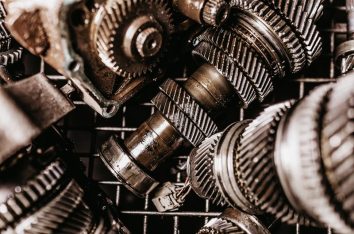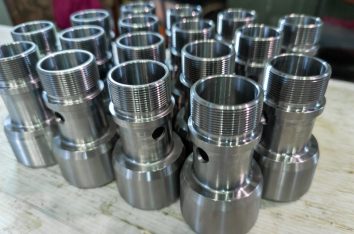
Quick Summary: Heavy industrial components can carry oil, grease, particulate, carbon, machining residues, and contaminants trapped inside cavities or narrow passages. Ultrasonic cleaning combines high-frequency sound energy with cleaning chemistry to create microscopic bubbles that collapse against contaminated surfaces. Agitation, filtration, heating, and suitable tank configurations can further support consistent cleaning performance for large components requiring thorough industrial cleaning.
An ultrasonic cleaner for heavy parts uses high-frequency sound energy within a cleaning solution to create microscopic bubbles that repeatedly collapse against contaminated component surfaces. This process, called cavitation, generates localized mechanical action that helps loosen oils, grease, particulates, carbon, and other residues. Combined with suitable cleaning chemistry and controlled immersion, ultrasonic processing can reach challenging component areas.
Heavy industrial components frequently contain complex geometries, internal passages, blind cavities, and recessed surfaces that conventional cleaning methods can struggle to reach consistently. Ultrasonic cleaning works through the liquid surrounding the component, allowing cleaning energy to reach areas beyond direct surface contact. Proper equipment configuration can support demanding applications involving large, heavy, or intricately designed industrial components requiring thorough surface cleaning.
Ultrasonic Cavitation Improves Cleaning
Ultrasonic cleaning uses transducers to generate sound waves throughout the cleaning solution, creating alternating pressure changes within the liquid. These pressure changes form microscopic bubbles that collapse rapidly, producing localized mechanical energy against contaminated surfaces. This cavitation action helps loosen tightly adhered residues from complex areas where stationary immersion alone can struggle to achieve sufficient mechanical cleaning action during demanding industrial cleaning processes.
Cavitation performance depends upon factors such as ultrasonic frequency, power density, solution characteristics, temperature, component geometry, and contamination type. Equipment design must distribute ultrasonic energy appropriately throughout the working zone so intended surfaces receive suitable cleaning action. For heavy components, tank dimensions and transducer placement become especially important because large loads require effective energy distribution throughout the cleaning solution.
Agitation Supports Heavy-Part Cleaning
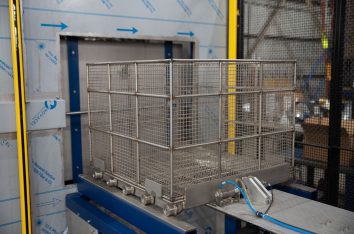
Mechanical agitation can complement ultrasonic energy by improving fluid movement around immersed components during processing. Large industrial systems can use movement mechanisms that agitate parts while ultrasonic energy operates within the cleaning solution. This combined action helps circulate cleaning chemistry around exterior surfaces, internal passages, recesses, and other difficult component features that require thorough contact during an industrial cleaning cycle.
Agitation can also expose different areas of a component to fresh cleaning solutions during repeated processing movements. This becomes valuable when heavy parts have irregular shapes, deep cavities, or internal channels requiring extensive fluid contact. Combining agitation with cavitation can create a stronger cleaning process than relying upon ultrasonic energy or stationary immersion alone for challenging industrial components with complicated geometries.
Filtration Maintains Cleaning Conditions
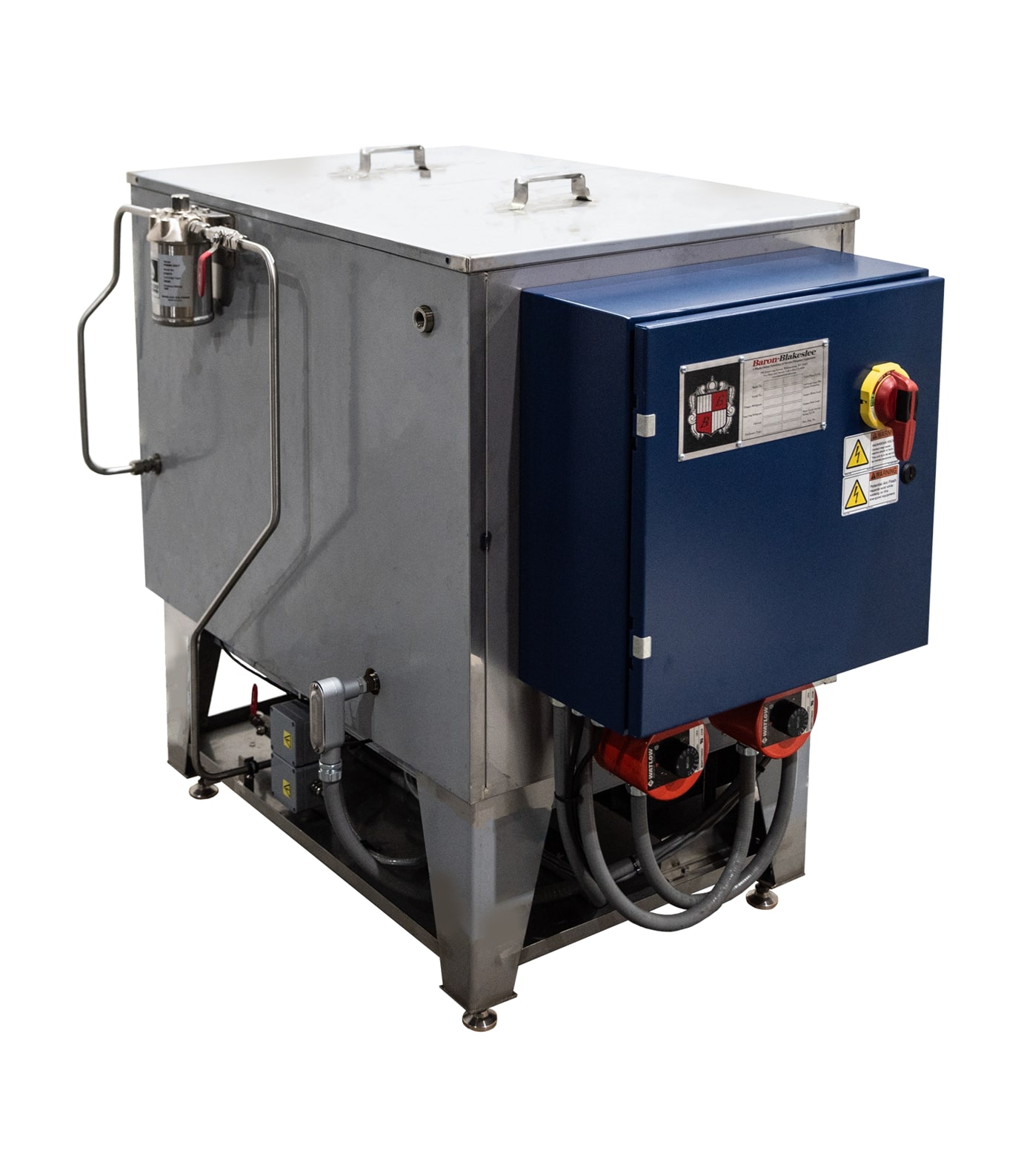
Filtration supports ultrasonic cleaning by removing suspended particulate and other contaminants from the solution during processing. Without suitable solution management, loosened debris can remain inside the tank and potentially redeposit onto component surfaces. High-flow filtration can circulate cleaning fluid through filters, helping maintain suitable solution conditions as contaminants are released from heavily soiled components throughout repeated production cycles.
Oil separation can also assist applications involving substantial quantities of machining oils, lubricants, or related contaminants. Removing these materials from the cleaning solution helps maintain useful process conditions during continued operation. Filtration and oil management should match the contamination profile, cleaning chemistry, production volume, and component requirements associated with each industrial application rather than relying upon one configuration for every cleaning process.
Why Equipment Capacity Matters
Large components require equipment with suitable tank dimensions, load capacity, working depth, and ultrasonic power for effective processing. Proper sizing allows components to remain immersed while retaining sufficient space around the load for solution movement and cleaning action. Equipment capacity should reflect the dimensions and weight of intended components rather than focusing solely upon tank volume or ultrasonic power ratings.
Larger systems can support individual heavy components, batches of smaller parts, or multi-stage processing involving washing, rinsing, and drying. The appropriate configuration depends upon production throughput, component handling requirements, available floor space, and required cleanliness levels. Carefully matching equipment capacity with actual production demands can support efficient processing without creating unnecessary limitations during loading, cleaning, unloading, or downstream operations.
Choosing the Right Industrial System
Industrial ultrasonic cleaners suit complex components requiring thorough surface cleaning. Choosing the best ultrasonic cleaners requires matching equipment to part dimensions, contamination, production volume, chemistry, filtration, agitation, and handling requirements. Baron Blakeslee combines engineering expertise with custom capabilities. Contact us to discuss heavy-part cleaning needs.
FAQs
Can ultrasonic cleaning handle heavy industrial parts?
Appropriately configured systems can handle heavy components using suitable tank dimensions, load capacities, ultrasonic power, properly selected ultrasonic frequency and mechanical handling equipment.
What contaminants can ultrasonic cleaning address?
Ultrasonic cleaning can address oils, grease, particulate, carbon, machining residues, and other contaminants when suitable chemistry and conditions are selected.
Why does agitation improve ultrasonic cleaning?
Agitation improves fluid movement around components, helping cleaning solutions reach external surfaces, cavities, passages, recesses, and complex geometries.
What determines ultrasonic equipment selection?
Equipment selection depends upon component size, weight, geometry, contamination, cleanliness requirements, production volume, chemistry, and processing stages.