Quick Summary: The environmental impact of an industrial cleaning process depends on more than chemistry alone. Equipment design, energy consumption, solvent losses, waste generation, maintenance, and cleaning performance all play important roles. Enclosed processing and careful solvent management may improve resource efficiency, but manufacturers should compare verified data and total lifecycle performance rather than relying on a single sustainability claim.
A modified alcohol solvent can contribute to a more sustainable precision cleaning process when paired with suitable equipment and disciplined operating practices.
The chemistry is capable of removing many nonpolar oils as well as certain polar residues. This makes it possible for one controlled process to address mixed contamination.
Sustainability should never be judged by solvent type alone. Solvent consumption, emissions, energy use, waste generation, water consumption, rejected parts, maintenance, and equipment service life all influence the overall environmental impact.
View Sustainability as a Complete Process Question
A meaningful comparison begins with the same production requirements. Cleaning methods should be evaluated using equivalent parts, contamination levels, cleanliness specifications, production throughput, and operating schedules.
Without consistent conditions, a lower solvent consumption figure may simply reflect longer cycle times, repeated cleaning, or a higher rejection rate.
Establish a baseline for solvent purchases, disposal volumes, utility consumption, labor, filtration, maintenance, and rejected parts. After implementing a process change, monitor the same metrics over a representative operating period. This approach generates facility-specific data instead of relying on broad environmental claims.
Enclosed Equipment Can Limit Routine Solvent Loss
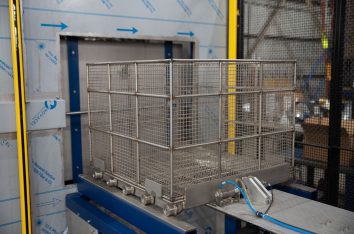
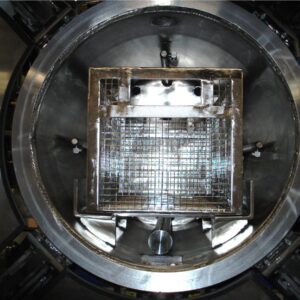
modified alcohol and hydrocarbon degreasers use sealed vacuum chambers rather than open processing. Enclosed transfer, controlled condensation, and vacuum drying retain solvent within the system. Actual losses depend on equipment condition, loading practices, maintenance, and the selected recipe.
Our airless vacuum vapor degreasers are engineered for modified alcohol and hydrocarbon cleaning. Process stages can be tailored to the parts and soils, reducing the need to run every load at the most aggressive settings. Repeatable recipes also make abnormal consumption easier to identify.
Effective Cleaning May Reduce Rework and Scrap
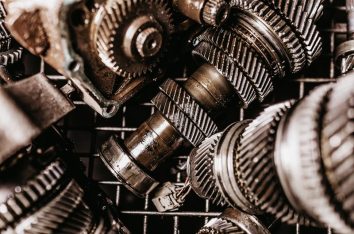
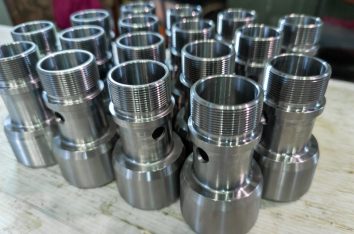
Cleaning quality directly affects material usage and production efficiency. Residual contamination can interfere with coating, bonding, inspection, assembly, or finished product performance. Parts that require recleaning or become scrap consume additional energy, labor, chemistry, and production time.
The ability of a modified alcohol solvent to remove both polar and nonpolar contaminants can be valuable for applications involving mixed soils.
Representative testing remains essential. Testing helps determine the shortest effective cleaning cycle, appropriate loading methods, filtration requirements, and acceptable solvent condition limits. A controlled operating range reduces unnecessary processing while maintaining product quality.
Solvent Life and Waste Management Matter
Filtration, water separation where applicable, soil management, and routine monitoring can extend useful bath life.
Operators should avoid mixing unapproved fluids or allowing unnecessary contamination into the machine. Waste should be concentrated and handled according to the solvent, soil, facility, and regulatory requirements.
For compatible nonflammable halogenated vapor-degreasing solvents, our solvent recycling systems reclaim usable solvent through distillation. Recovery equipment is not automatically applicable to every modified alcohol process, so chemistry and system compatibility must be reviewed before integration.
Consider Energy, Utilities, and Facility Conditions
Vacuum pumps, heating, refrigeration, circulation, and drying consume energy. A sustainability review should compare energy per cleaned part, not only machine nameplate power. Load density, cycle development, insulation, maintenance, production scheduling, and standby practices can influence actual use.
Modified alcohol cleaning may reduce or remove water demand in applications that would otherwise use aqueous washing and rinsing. That potential benefit should be balanced against solvent handling, ventilation, energy, and waste treatment.
Define a Measurable Sustainability Case With Baron Blakeslee
Baron Blakeslee has built standard and custom industrial equipment in the United States since 1920.
We can test parts, evaluate soils, review facility constraints, and develop a cleaning process with measurable operating targets. Our team also assists with installation, training, technical service, replacement parts, and practical maintenance planning for stable long-term operation.
Get in touch with one of our specialists today to get answers to your questions!