Quick Summary: Hydrocarbon cleaning is commonly used for oils, greases, waxes, and similar nonpolar contamination. Successful application depends on solvent properties, substrate compatibility, enclosed equipment, filtration, drying, safety controls, and process testing. Understanding these factors helps manufacturers select a practical cleaning route for precision parts.
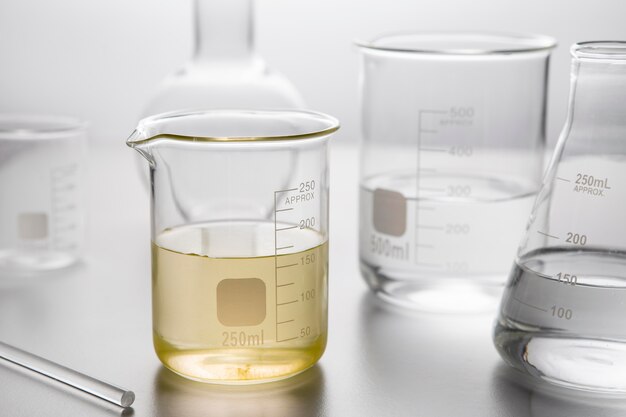
Hydrocarbon-based solvents are organic cleaning fluids composed primarily of hydrogen and carbon. They dissolve many nonpolar contaminants, including machining oils, greases, waxes, corrosion preventives, and certain adhesives. Cleaning performance varies according to chemical structure, boiling range, flash point, purity, and formulation.
Baron Blakeslee evaluates the complete cleaning process, including the solvent, components, contamination, cleanliness standards, and equipment.
Even the right chemistry may produce inconsistent results if the cleaning cycle, filtration, loading method, or drying process does not match the application.
How Hydrocarbon Cleaning Works
Hydrocarbon cleaning follows the principle that materials with similar chemical properties tend to dissolve one another. Nonpolar hydrocarbon fluids interact effectively with many petroleum-based contaminants, loosening and removing them from the component surface. Heat, immersion, spray, circulation, and controlled part movement can further improve cleaning performance.
As cleaning continues, the solvent gradually accumulates dissolved oils and suspended particles. Filtration removes solid contaminants, while routine bath monitoring helps determine when the solvent reaches its practical contamination limit.
Since dissolved contaminants pass through standard filters, solvent management should address both particulate loading and dissolved residues.
Where Hydrocarbon Solvents Perform Well
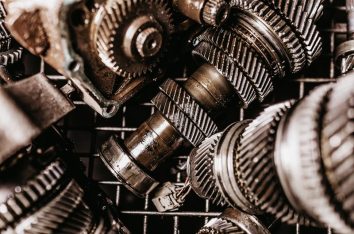
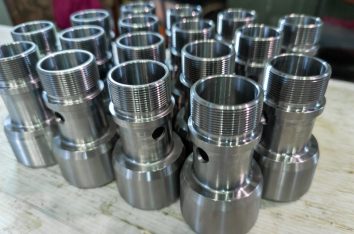
These solvents are often considered for machined metal parts, bearings, stamped components, automotive parts, aerospace hardware, and other precision products contaminated with oil or grease.
Their low surface tension can help fluid reach narrow gaps, blind holes, threads, and complex geometries when the process is designed correctly.
Hydrocarbons may be less effective on salts, many inorganic residues, and strongly polar contamination. Modified alcohol chemistry can broaden the soil range. Our modified alcohol and hydrocarbon degreasers are configured around the selected solvent, part geometry, cleanliness target, and production needs.
Important Solvent Properties
Boiling range affects heating, vapor behavior, cycle duration, and drying performance. Flash point influences equipment classification and required safety measures.
Evaporation rate determines how easily the solvent leaves recessed areas after cleaning. Aromatic content, odor, purity, and solvency strength may also affect workplace practices, material compatibility, and residue control.
Review the solvent supplier’s technical and safety documentation before selecting equipment. Greater solvency is not always the best choice because certain chemistries may affect polymers, elastomers, coatings, adhesives, or surface markings. Compatibility testing at realistic temperatures and exposure times remains an important step.
Why Enclosed Vacuum Equipment Is Common
Hydrocarbon fluids are combustible, so process equipment must manage vapor, ignition risks, temperature, and solvent containment.
Enclosed vacuum technology can conduct cleaning and drying inside a sealed chamber. Reduced pressure also permits controlled vapor phases and can assist drying from complex features.
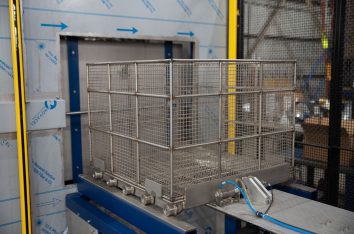
Our airless hydrocarbon solvent cleaning systems are designed for precision cleaning under vacuum. Depending on the application, a cycle may use immersion, circulation, vapor treatment, filtration, mechanical motion, and vacuum drying. Automation repeats qualified recipes and limits manual handling.
Filtration, Bath Care, and Drying
Filtration should match the expected particle size, contamination volume, and required cleanliness level. Differential pressure, flow measurements, and visual inspection help determine filter condition. Part baskets and fixtures should promote effective fluid exchange and drainage instead of trapping contamination or shielding surfaces.
Bath condition can be evaluated through contamination testing, visual appearance, cleaning performance, or other application-specific methods. Operators should prevent water, incompatible fluids, and excessive debris from entering the system. Effective upstream draining and chip removal reduce the contamination load placed on the solvent.
Drying must remove solvent from external surfaces and internal features without leaving unacceptable residue. Vacuum level, part temperature, cycle time, orientation, and geometry all influence drying performance. Dense production loads may restrict vapor movement, so production trials should use realistic basket configurations and quantities.
Safety and Facility Planning
Equipment selection and installation should match the properties of hydrocarbon-based solvents, applicable regulations, ventilation plans, available utilities, and the facility’s risk assessment. Temperature controls, vapor management, compatible seals, grounding, interlocks, leak inspections, and preventive maintenance all contribute to responsible system design.
Operators should receive training covering loading procedures, approved chemistries, alarm response, sampling, filter replacement, spill response, waste handling, and lockout procedures.
Clear labeling reduces the risk of introducing unapproved fluids into the cleaning system. Safety documentation should accurately reflect the installed equipment and local regulatory requirements.
Environmental and Cost Considerations
A closed cleaning system does reduce routine solvent loss compared to open handling methods, although actual consumption depends on equipment condition, maintenance practices, loading methods, and daily operation.
Longer solvent life can lower purchasing costs and reduce waste generation when bath quality remains within qualified operating limits.
Compare the total operating cost, including solvent consumption, energy use, filtration, labor, waste disposal, maintenance, throughput, and rejected parts. Hydrocarbon cleaning may eliminate the need for water and lengthy drying stages in suitable applications. The overall cost balance depends on local operating expenses, production volume, and cleanliness requirements.
When a Hybrid Process May Be Better
Some components carry both heavy oil and polar or particulate contamination that one chemistry does not remove efficiently. Hybrid degreasing systems can combine modified alcohol or hydrocarbon cleaning with aqueous stages. Testing determines the sequence, rinsing, drying, and controls needed for the final surface specification.
Do not base the decision on soil description alone. Downstream coating, bonding, inspection, assembly, packaging, and service conditions may reveal residue limits that are not visible after cleaning. Functional testing can confirm that the selected process prepares the part for its next step.
Evaluate Hydrocarbon Cleaning With Baron Blakeslee
Baron Blakeslee has engineered and manufactured industrial equipment in the United States since 1920. We can test your parts and soils, review solvent options, define cycle requirements, and develop standard or custom equipment.
Our service approach includes installation, training, technical assistance, replacement parts, and contract maintenance.