Quick Summary: Rail components collect heavy lubricants, wear debris, brake residues, and other contaminants during normal service. These materials must be removed thoroughly before inspection, repair, or reassembly to maintain safe and reliable rolling stock. Vapor degreasing can reach bearing races, threaded fittings, recessed areas, and other complex geometries that manual cleaning methods may not clean consistently. High-volume maintenance facilities can benefit from equipment designed around repeatable cleaning cycles, suitable material handling for components of different sizes, and solvent recovery systems that help manage ongoing operating costs. Consistently clean components also create reliable inspection conditions and help maintenance teams maintain thorough records for regulatory and maintenance requirements.
Rail operators and maintenance facilities handle components that accumulate heavy oils, grease, brake dust, and metal residues throughout normal service, which is why a reliable degreaser machine for railway plays such a central role in keeping equipment safe and dependable. Wheel assemblies, bearings, couplers, and braking components all require thorough cleaning before inspection, repair, or reassembly, and contamination left behind can mask wear or damage that inspectors need to catch.
Baron Blakeslee has manufactured vapor degreasers since 1920, and our equipment supports the demanding cleaning cycles rail maintenance operations depend on.
The Contamination Challenge in Rail Maintenance
Railway components operate in demanding environments that expose them to heavy lubricants, grease, brake residues, metal particles, dust, and general environmental grime. These contaminants can gradually accumulate on bearings, wheel assemblies, couplers, braking components, axles, and other important parts.
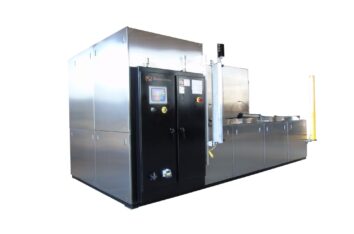
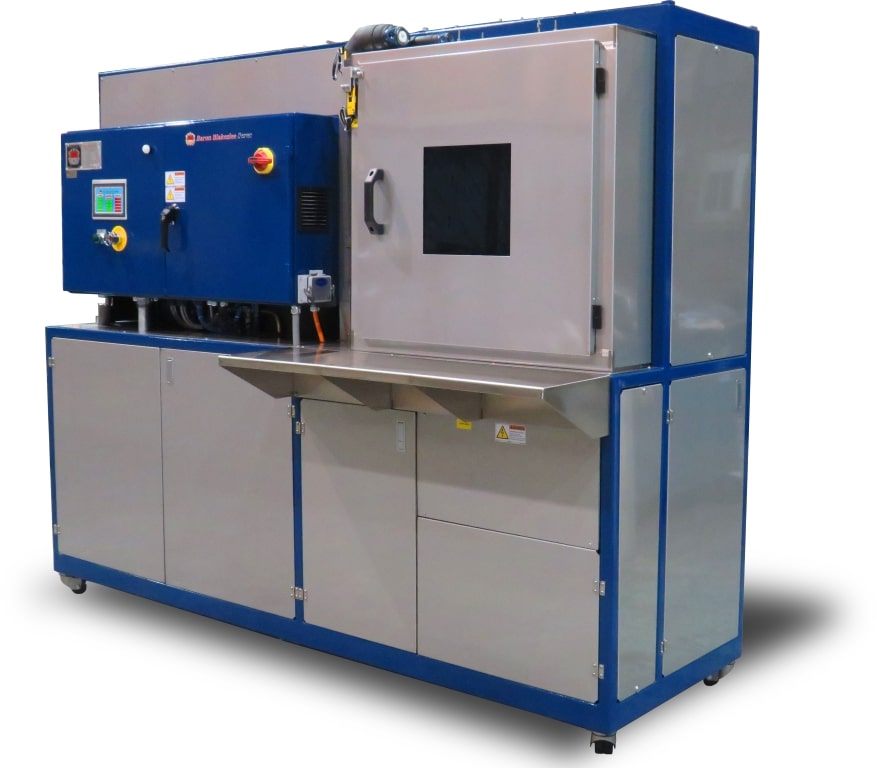
Together, these substances can form stubborn deposits that basic washing or manual wiping may struggle to remove consistently. Grease can also hold abrasive particles against metal surfaces, making thorough inspection more difficult. A dedicated degreasing machine for railway applications addresses these demanding soil loads through controlled cleaning cycles designed for industrial maintenance environments.
Thorough degreasing leaves components in a cleaner condition for inspection, repair, and reassembly. This gives technicians a better opportunity to identify surface defects, wear patterns, corrosion, and other conditions that accumulated contamination could conceal during routine maintenance.
Why Clean Components Matter for Safety
Thorough cleaning gives railway maintenance technicians a clearer view of component surfaces during inspection. Removing grease, oil, brake residues, and accumulated debris makes it easier to detect cracks, pitting, scoring, corrosion, and unusual wear.
This visibility becomes particularly important for safety-related components such as bearings, axles, couplers, and braking hardware. Contamination can obscure surface defects and make it more difficult to assess a component’s actual condition.
A consistent degreasing process creates cleaner and more comparable inspection conditions. Technicians can then identify potential problems earlier and make informed decisions about repair, replacement, and reassembly before components return to service.
Vapor Degreasing for Precision Cleaning
Vapor degreasing uses heated solvent vapor that condenses on cooler component surfaces. The condensed solvent dissolves oils, grease, and other contaminants before draining back into the system. Because the vapor can reach recessed sections, narrow passages, and intricate geometries, the process can clean areas that are difficult to access through manual methods.
This makes vapor degreasing particularly suitable for precision components where consistent surface cleanliness is important. It can also create more repeatable cleaning conditions across successive maintenance loads.
Handling High-Volume Maintenance Cycles
Rail maintenance facilities often process large numbers of components as part of scheduled inspections, repairs, overhauls, and fleet maintenance programs. Degreasing equipment built around repeatable cycles can deliver consistent cleaning results across successive loads while fitting into established maintenance workflows.
Proper system sizing is also important. Tank capacity, cycle time, loading requirements, and solvent management should correspond to the facility’s expected component volume and maintenance schedule.
Solvent Recovery and Cost Control
Solvent consumption can become a significant operating consideration when a facility cleans large quantities of rail components. Recovery systems use distillation to separate contaminants from reusable solvent, allowing the recovered solvent to return to the cleaning process.
This approach reduces fresh-solvent consumption while also limiting the amount of contaminated material that requires disposal. It can create a more controlled cleaning operation and help facilities manage recurring operating expenses.
Material Handling Considerations
Large rail components can be challenging to load, position, and remove safely without suitable handling equipment. Hoists, conveyors, baskets, and automated transfer systems can be incorporated into a degreasing line to accommodate components with different dimensions and weights.
Coordinating material handling with the cleaning system can reduce unnecessary movement between process stages. It can also create a more organized workflow for facilities processing components continuously or in high volumes.
Meeting Regulatory and Inspection Standards
Consistent cleaning results can contribute to dependable inspection procedures by giving technicians comparable surface conditions from one maintenance cycle to another. Automated or controlled degreasing processes can reduce some of the variation associated with manual cleaning while establishing repeatable operating parameters.
Facilities can incorporate these cleaning parameters into established maintenance procedures and inspection documentation. Consistent processes also make it easier to demonstrate how components were prepared for inspection and subsequent maintenance work.
Reducing Corrosion Risk During Storage and Transit
After cleaning, components can spend time awaiting inspection, repair, assembly, or transportation to another location. Residual contaminants or moisture on exposed metal surfaces can contribute to corrosion during these periods.
A properly selected cleaning and drying process helps leave components in a suitable condition for the next maintenance stage while reducing contamination-related surface deterioration.
Supporting Long-Term Fleet Reliability
A consistent cleaning program contributes to better maintenance practices by giving technicians cleaner components for inspection, repair, and reassembly. Removing accumulated contaminants can also help maintenance personnel identify developing wear before components return to service.
Across a large fleet, repeatable cleaning processes can form an important part of scheduled maintenance and help keep component condition consistent.
Build a Degreasing System for Rail Maintenance
Baron Blakeslee brings over a century of degreasing equipment experience to rail maintenance applications, and our range of hybrid degreasing systems and co-solvent systems can be configured around the specific soil types and throughput a rail facility requires.
For operations managing heavier components, our material handling and automation equipment integrates directly with degreasing systems to move parts efficiently through the cleaning process. Facilities also looking to recover and reuse solvent can pair a degreaser with our solvent recovery systems to control long-term operating costs.
Baron Blakeslee also supports automotive and other transportation-adjacent industries with similar precision cleaning requirements.
Contact Baron Blakeslee to discuss a degreasing solution built around your rail maintenance operation.
Frequently Asked Questions
What contaminants does a railway degreaser typically need to remove?
Rail components commonly carry heavy lubricants, metal wear debris, environmental grime, and brake system residues, all of which need thorough removal before inspection or reassembly.
Why is vapor degreasing preferred over manual cleaning for rail parts?
Vapor degreasing reaches into complex geometries and recessed areas that manual wiping often misses, providing more consistent and thorough cleaning across bearing races, threaded fittings, and other detailed surfaces.
Can degreasing equipment handle both small fasteners and large axle assemblies?
Yes, equipment configured with appropriate material handling systems, such as conveyors or hoists, can accommodate a wide range of component sizes within a single maintenance facility.
How does solvent recovery benefit high-volume rail maintenance operations?
Recovering and reusing solvent through distillation reduces how much fresh solvent a facility needs to purchase, which directly lowers operating costs for continuous, high-volume cleaning cycles.
Does clean component inspection actually improve rail safety?
Yes, removing grease and grime gives inspectors a clear view of metal surfaces, helping them identify cracks, pitting, or wear that contamination could otherwise mask.