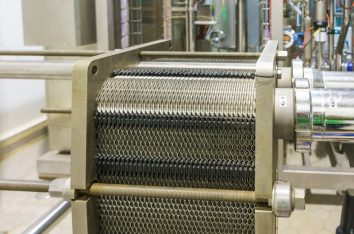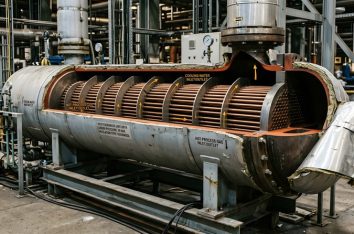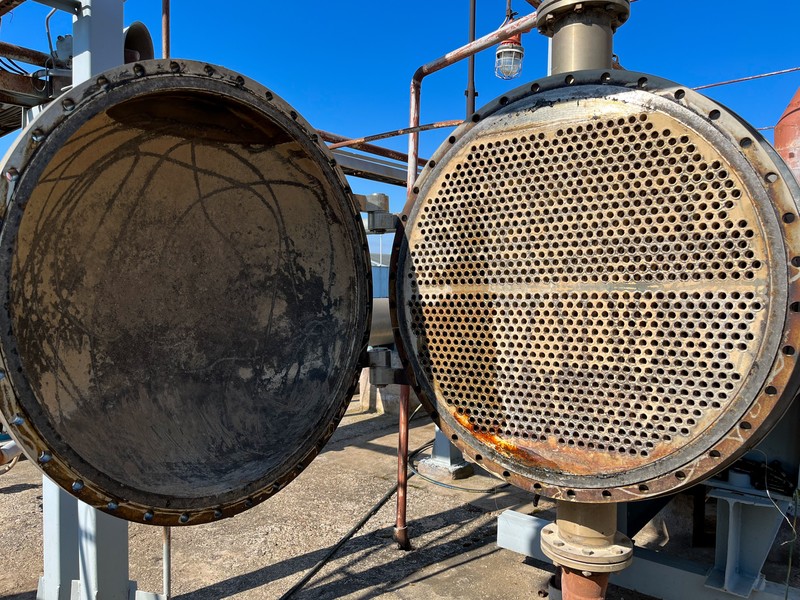
Quick Summary: Oil and gas facilities rely on heat exchangers throughout nearly every stage of production, from crude oil preheating and amine gas sweetening to LNG regasification and flare gas recovery. Cylindrical-plate designs are well suited to this sector because their welded, gasket-free construction can withstand corrosive fluids, particulates, and significant temperature fluctuations with less maintenance. Applications include lube oil cooling for rotating equipment, glycol dehydration, produced water treatment, steam generation for enhanced oil recovery, and pipeline flow assurance. Matching the exchanger to the required flow rate, fluid chemistry, pressure rating, and operating conditions protects equipment, lowers fuel consumption, and reduces costly downtime across upstream, midstream, and downstream operations.
Every stage of oil and gas production generates heat that must be managed carefully, and heat exchangers for oil and gas applications sit at the center of that process. From wellhead to refinery, fluids and gases move through equipment that must be cooled, heated, or condensed within tight tolerances.
As the exclusive North American distributor of Spirec heat exchangers, Baron Blakeslee supplies compact, corrosion-resistant units built for the pressures and temperatures this sector demands.
Below, we outline eleven of the most common applications heat exchangers serve across upstream, midstream, and downstream operations.
Crude Oil Preheating
Before crude oil enters a distillation column, it must reach a target temperature so its lighter fractions can separate efficiently. A shell-and-plate unit recovers heat from outgoing product streams and transfers that energy to incoming crude, reducing the amount of fuel required by the furnace.
This preheating stage can represent one of the refinery’s most significant opportunities for energy recovery. Even a moderate increase in incoming crude temperature can reduce the heating load placed on downstream equipment.
Gas Compression Cooling
Natural gas compression increases both pressure and temperature, and gas that remains too hot can place additional stress on downstream piping, seals, and instrumentation. Interstage and aftercooler exchangers remove heat from the compressed gas before it continues through the process train, protecting equipment and maintaining predictable flow conditions at compressor stations.
Effective cooling also keeps gas temperatures within the limits required by downstream process equipment. Selecting an exchanger according to gas composition, pressure, flow rate, and temperature helps maintain reliable performance as operating conditions change.
Produced Water Treatment
Oil and gas wells bring water to the surface alongside hydrocarbons, and this produced water often requires cooling before treatment, reinjection, or disposal.
Compact cylindrical-plate designs can handle the corrosive and particulate-laden characteristics of this stream, while their construction can reduce fouling concerns and simplify inspection compared with traditional tube bundles.
Exchanger selection becomes particularly important when the water contains suspended solids, salts, hydrocarbons, or other contaminants. These characteristics can affect material compatibility, heat transfer performance, and maintenance requirements.
Amine Gas Sweetening
Removing hydrogen sulfide and carbon dioxide from natural gas depends on an amine solution that absorbs these contaminants at lower temperatures and releases them at higher temperatures. A lean-rich exchanger transfers heat between the two amine streams, reducing the reboiler duty required to regenerate the solvent and lowering overall plant energy consumption.
Consistent heat recovery between the lean and rich amine streams helps regulate regeneration temperatures. The exchanger also contributes to the thermal balance needed to maintain effective gas treatment throughout the process.
Lube Oil Cooling for Rotating Equipment
Pumps, compressors, and turbines throughout oil and gas facilities depend on lubricating oil remaining within a specified temperature range.
Excessive heat can accelerate oil degradation and increase bearing wear. A dedicated lube oil cooler removes excess heat from the lubricant, keeping rotating equipment within its rated operating range and extending service intervals.
Temperature control becomes especially important for machinery that runs continuously under heavy loads. Reliable heat removal preserves lubricant properties and keeps critical equipment operating within its specified thermal limits.
LNG Vaporization and Regasification
LNG terminals must convert liquefied natural gas back into its gaseous state before it can enter a distribution pipeline.
Seawater or ambient-air heat exchangers supply the thermal energy needed for vaporization, while the equipment must withstand substantial temperature differences and, in many installations, exposure to brackish or saline water.
Material selection and exchanger configuration must account for the extreme temperature conditions associated with LNG service. Consistent thermal performance helps maintain a controlled transition from liquid LNG to pipeline-ready natural gas.
Glycol Dehydration Systems
Natural gas leaving the wellhead carries water vapor that can freeze in pipelines or form corrosive compounds. Glycol dehydration units strip this moisture out, and a glycol-glycol exchanger recovers heat between the rich and lean glycol streams, reducing the fuel gas consumed by the regenerator.
Efficient heat recovery reduces the amount of new energy needed during glycol regeneration. This can help lower operating costs while maintaining the temperatures required for effective moisture removal from natural gas.
Steam Generation for Enhanced Oil Recovery
Heavy oil reservoirs often need steam injection to lower crude viscosity enough for it to flow to the surface. Waste heat recovery exchangers capture energy from flue gas or produced fluids and use it to preheat boiler feedwater, improving the economics of steam-assisted recovery methods.
Heat recovery can improve the overall efficiency of steam generation systems by making productive use of energy that would otherwise be lost. Proper exchanger sizing also helps maintain consistent feedwater temperatures during changing production conditions.
Pipeline Pigging and Flow Assurance
Long-distance pipelines rely on temperature control to prevent wax or hydrate formation inside the line. Heating exchangers installed at pump or compressor stations maintain flow temperature within a safe range, supporting pigging operations and reducing the risk of blockages during colder months.
Maintaining the right temperature profile can help operators manage changing ambient conditions and prevent flow restrictions. Heat exchangers can therefore form an important part of broader flow assurance strategies across long pipeline networks.
Refrigeration for NGL Recovery
Extracting natural gas liquids such as propane and butane from raw gas streams requires refrigeration to condense these heavier hydrocarbons out of the vapor. Cylindrical-plate condensers handle this phase change reliably, and their compact footprint suits the space constraints common at gas processing plants.
Efficient condensation depends on maintaining precise temperature conditions as the gas passes through the refrigeration system. A properly selected exchanger can help maximize hydrocarbon recovery while accommodating the pressure and temperature demands of gas processing.
Flare Gas Recovery Cooling
Rather than burning off excess gas at a flare stack, many facilities now recover it for reuse, and this recovered gas needs cooling before it can be compressed and reintroduced into the process. Heat exchangers sized for variable flow rates handle the intermittent nature of flare gas recovery streams without sacrificing efficiency.
Because recovered flare gas can experience substantial changes in composition, pressure, and flow, exchanger selection must account for variable operating conditions. Effective cooling helps prepare the recovered stream for compression and reintegration into the facility’s process system.
Cooling for Wellhead Control Equipment
Hydraulic and electronic control systems positioned at the wellhead need to stay within a safe operating temperature, particularly in hot climates or high-pressure applications where equipment housings can trap heat. Small, dedicated exchangers keep control fluid temperatures stable so these systems respond reliably when operators need them most.
Stable fluid temperatures can help protect sensitive components from excessive thermal stress and performance fluctuations. Compact exchanger designs are particularly useful where wellhead equipment has limited installation space and must operate reliably in demanding field conditions.
Discuss Your Oil and Gas Heat Exchanger Needs
Selecting the right heat exchanger for an oil and gas application depends on flow rates, fluid chemistry, pressure ratings, and available space, and getting that specification wrong can mean costly downtime later.
Baron Blakeslee works directly with engineering teams to match Spirec heat exchangers to the exact operating conditions of a given process, drawing on decades of applications experience across the energy sector.
If your facility handles fabrication services alongside standard equipment needs, Baron Blakeslee can support custom configurations as well.
Reach out to our team to discuss your next oil and gas heat transfer project.
Frequently Asked Questions
What type of heat exchanger works best for oil and gas applications?
Cylindrical-plate exchangers are widely used because their welded, gasket-free construction resists the corrosive fluids and particulates common in upstream and midstream operations.
How often should heat exchangers in oil and gas facilities be inspected?
Inspection frequency depends on fluid chemistry and operating temperature, but most facilities schedule checks at least annually, with more frequent monitoring for fouling-prone streams.
Can one heat exchanger design handle both gas and liquid streams?
Some cylindrical-plate models are rated for combined liquid, gas, and vapor heat transfer, which reduces the number of unique units a facility needs to stock and maintain.