Quick Summary: Preventing corrosion in a heat exchanger requires the right combination of corrosion-resistant materials, controlled process fluid chemistry, and a design that minimizes crevices where stagnant fluid can concentrate corrosive agents. Keeping flow velocity within a suitable range prevents both slow-flow buildup and high-velocity erosion, while routine inspections and temperature and pressure monitoring can reveal developing problems before leaks occur. Welded, all-stainless-steel construction also removes many gasket-related crevices that can contribute to localized corrosion. When fluids are too aggressive for water treatment alone, choosing an exchanger engineered around that specific chemistry creates a more dependable long-term solution.
Corrosion is one of the most common reasons heat exchangers fail before their expected service life ends, so understanding how do you prevent corrosion in a heat exchanger is a practical concern for any facility running thermal equipment. Left unmanaged, corrosion thins metal walls, creates leak paths between fluid streams, and can eventually take a unit out of service entirely.
As the North American distributor for Spirec heat exchangers, Baron Blakeslee has seen which prevention strategies actually hold up in demanding industrial environments, and we cover the most effective ones here.
Understanding Why Heat Exchangers Corrode
Corrosion occurs when a metal surface reacts chemically or electrochemically with the fluid surrounding it. Conditions such as dissolved oxygen, chloride concentration, pH imbalance, and elevated temperatures can accelerate this process. Heat exchangers are particularly susceptible because their operation creates extensive contact between metal surfaces and process fluids, concentrating these factors at the fluid-metal interface.
Corrosion risk also changes as operating conditions interact over time. Temperature cycling, variations in fluid composition, upstream contamination, and extended exposure can gradually weaken the protective layers that normally shield metal surfaces. Even a material that performs well under one set of conditions may face greater risk when those conditions change.
Reviewing these factors during equipment selection and routine maintenance makes it easier to identify specific corrosion mechanisms before they begin affecting heat transfer efficiency, pressure integrity, or the overall service life of the exchanger.
Choosing Corrosion-Resistant Materials
Stainless steel remains a common choice for heat exchangers handling many types of industrial fluids because its chromium content forms a passive oxide layer that helps protect the underlying metal from further corrosion. Selecting a stainless steel grade that matches the specific fluid chemistry, instead of automatically choosing a general-purpose alloy, can significantly extend equipment service life.
Material selection should consider the complete operating environment rather than focusing only on the primary process fluid. Chlorides, acids, solvents, suspended contaminants, and temperature variations can each influence how an alloy performs under actual operating conditions.
Comparing these factors with the properties of available stainless steel grades and other compatible materials gives engineers a more reliable basis for selecting construction that suits the expected service environment. The right material can reduce corrosion exposure from the beginning instead of relying entirely on corrective treatment later.
Controlling Water and Process Fluid Chemistry
Treating process water to regulate pH, dissolved oxygen, and chloride concentration reduces the fluid’s overall corrosiveness. Many facilities also add corrosion inhibitors to cooling water loops, where they can form a protective film across metal surfaces and reduce direct exposure to corrosive conditions.
Chemistry control is most effective when measurements are collected consistently rather than only after corrosion becomes visible. Tracking pH, chloride levels, dissolved oxygen, conductivity, and inhibitor concentration can reveal changes that raise corrosion risk and give operators time to respond.
Treatment programs should also reflect operating temperature and system volume because both factors influence chemical reactions and determine how effectively corrosion-control measures perform. A treatment strategy that works under one operating condition may require adjustment when temperatures, flow rates, or system conditions change.
Avoiding Crevice Corrosion Through Design
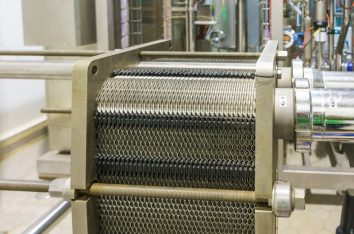
Gaps and crevices around components such as gaskets can create stagnant areas where corrosive agents become concentrated and oxygen levels fall. These conditions can accelerate localized corrosion and make affected areas difficult to detect during routine inspections. Welded, gasket-free plate designs remove many of these potential problem areas at the design stage, reducing one of the more common pathways for crevice corrosion.
This design consideration is particularly important when an exchanger handles fluids that are already aggressive toward metal surfaces. Fewer crevices mean fewer locations where stagnant fluid can remain trapped and create conditions that encourage localized attack.
Managing Flow Velocity
Flow that moves too slowly can leave corrosive agents and deposits resting against metal surfaces, increasing the chance of localized damage.
Excessively fast flow creates a different problem because it can produce erosion-corrosion and gradually strip away protective oxide layers. Designing the exchanger around a velocity range suited to both the fluid and construction material helps avoid these two extremes.
The appropriate range depends on the fluid’s characteristics, the selected material, and the exchanger’s operating conditions. Flow should therefore be considered as part of the broader corrosion-control strategy rather than treated as an isolated design variable.
Monitoring and Early Detection
Regular inspection, combined with long-term tracking of temperature differentials and pressure drop, can reveal early signs of corrosion-related performance changes before a leak develops. Detecting these shifts while the damage remains limited gives maintenance teams an opportunity to investigate and address the underlying issue before minor pitting develops into a more serious structural problem.
Performance monitoring becomes especially valuable when an exchanger handles aggressive fluids or operates continuously. Comparing current readings against established baseline values can expose gradual changes in heat transfer performance, pressure drop, or flow behavior that may otherwise go unnoticed.
Knowing “How do you prevent corrosion in a heat exchanger?” also means recognizing that prevention does not stop at material selection or chemical treatment. Ongoing performance data can reveal when operating conditions are beginning to move outside the range in which the exchanger performs reliably.
Selecting the Right Exchanger Type for Corrosive Service
Some process streams are sufficiently corrosive that water treatment alone cannot eliminate the risk. In these situations, selecting an exchanger specifically designed for demanding chemical conditions can be a more dependable long-term approach.
Appropriate material selection combined with welded construction can reduce exposure to several common corrosion pathways while matching the equipment more closely to the process environment.
This approach is particularly relevant for facilities that regularly handle aggressive fluids or have experienced recurring corrosion despite treatment adjustments. Choosing equipment around the actual chemistry can address the source of the problem rather than relying solely on ongoing corrective measures.
Training Staff to Recognize Early Warning Signs
Even well-designed equipment benefits from operators who understand what early corrosion may look like.
A subtle change in effluent color, an unexpected pressure drop, or a slight shift in outlet temperature can indicate that operating conditions have changed or that corrosion may be developing. Facilities that incorporate this awareness into routine rounds can identify potential problems well before they result in unplanned downtime.
Operator observations also complement automated monitoring because not every change is immediately obvious from a single measurement. Staff familiar with normal equipment behavior can recognize unusual patterns and flag them for further inspection before the condition becomes more severe.
Documenting Fluid Chemistry Changes Over Time
Process fluids don’t always stay constant, and shifts in feedstock, water source, or upstream treatment can change how aggressive a fluid becomes toward exchanger materials. Keeping a record of chemistry over time helps maintenance teams connect a corrosion issue to its actual cause rather than assuming equipment age is automatically to blame.
A historical record becomes especially useful when process conditions change gradually. Recording feedstock changes, treatment adjustments, water quality, cleaning chemicals, temperature shifts, and operating interruptions can reveal patterns behind recurring corrosion.
Discuss Corrosion-Resistant Heat Exchanger Options
Corrosion prevention works best as a combination of the right materials, the right design, and consistent monitoring rather than any single fix. Baron Blakeslee’s Spirec heat exchangers use all-stainless-steel, welded construction specifically to reduce the crevice corrosion and material compatibility issues that shorten equipment life elsewhere.
Facilities managing corrosive fluids across multiple systems may also benefit from Baron Blakeslee’s custom applications capabilities for equipment built around specific process requirements.
Contact our team to discuss corrosion-resistant heat exchanger options for your facility.
Frequently Asked Questions
What is the most common cause of heat exchanger corrosion?
Dissolved oxygen combined with chlorides or low pH in the process fluid is one of the most frequent drivers of corrosion, particularly in cooling water systems that aren’t treated consistently.
Does stainless steel eliminate the risk of corrosion entirely?
No, stainless steel resists corrosion far better than many alloys due to its passive oxide layer, but aggressive chlorides or extreme pH conditions can still cause pitting or crevice corrosion if the fluid chemistry isn’t managed.
How does flow velocity affect corrosion in a heat exchanger?
Velocity that’s too low allows corrosive agents to settle against surfaces, while velocity that’s too high can erode protective oxide layers, so maintaining a suitable range for the specific fluid matters.
Can gasket-free designs really reduce corrosion risk?
Yes, eliminating gaskets removes the crevices where stagnant fluid and oxygen depletion typically accelerate localized corrosion, which is one advantage of fully welded plate construction.
What early signs indicate corrosion is developing in an exchanger?
A widening gap between expected and actual temperature performance, along with gradually increasing pressure drop, often signals developing corrosion before a visible leak appears.